
FlickVision Interview
Tiger 24 Warren Pereira Interview
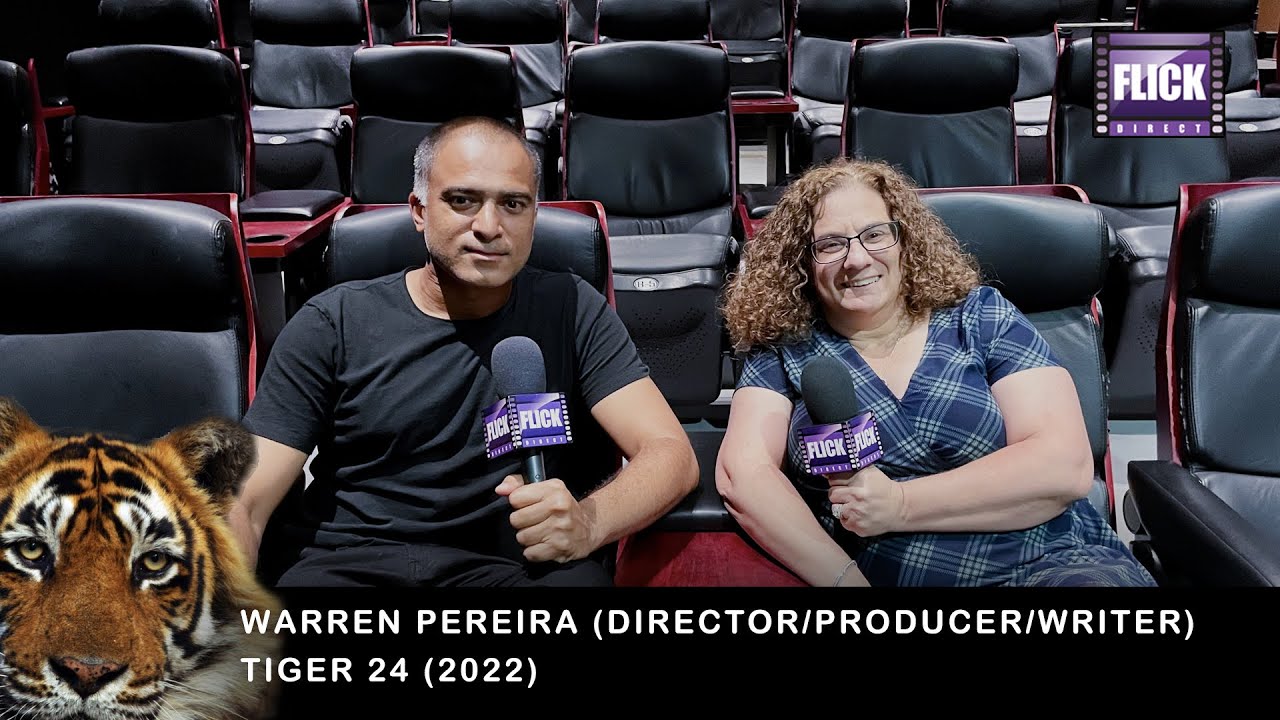
Filmmaker Warren Pereira brings viewers a stark and realistic look inside India's Ranthambore Tiger Reserve while focusing specifically on Tiger 24 (Ustad). Watch as he speaks with FlickDIrect’s Allison Rose about these majestic animals, Ustad’s incarceration, and the ten years Pereira spent showcasing the plight of the tigers and their human counterparts.
Read transcript
Automatically transcribed; may contain errors.
hey everybody this is allison with flick direct and i am in the living room theater here in beautiful boca raton florida and i am speaking with warren pereira about tiger 24 hi hi how are you pretty good how you doing i'm doing well thank you what does it mean to have your movie screening here it's it's great i mean i i didn't imagine this film would get on the big screen because traditionally documentaries go straight to streaming or go nowhere but uh i'm you know living room theaters really liked it uh both the ceo and the owner are independent filmmakers originally and they've been actually tracking this film for a while and so when they wanted the theatrical i said yes yeah yeah of course why not and i think it deserves to be seen on a big screen i think so i mean for me for a number of reasons i mean the traditional reasons the footage is beautiful it's the only footage of t24 in 4k in the wild but also for me as a filmmaker there's a sense of control because you know you're here formally you made a decision to come here to watch this film you're less likely to get on your cell phone or you can't stop it you know and so for me it's like people get to see it you know continuously in a more focused manner and also the film was mixed on a stage in la in 5.1 surround sound oh wow and so to be able to show it in surround sound is this is probably one of the only times it'll be actually seen properly in 5.1 surround sound because um people at home who have systems that are surround sound are usually not set up correctly so so i'm glad on all those levels you know fantastic and this film was eight years making filmmaking i mean it's ten years in the making but uh the first three years i was just going to india about once a year twice a year to just collect footage and put on a hard drive so it wasn't the whole year and i wasn't thinking about it the whole year but then once he became this big icon for conservation with all the billboards and the court cases and the interviews it became a much more serious you know documentary with big implications and a lot of responsibility for me so then i started thinking about it a lot and and i felt the weight of what i was doing so then it got a little bit into me and i had to get very involved i find it so interesting that the villagers for the most part don't want him back yet throughout the country there's activism going on to get him set free yeah i mean the villagers immediately after the attack the ones in the village where saini wasani was killed it's i mean we normal for them to to not want this in their minds a beast that killed you know one one of their neighbors or father or you know and so absolutely but then if you ask them now they have a different thought about it now and they're actually much more tolerant of of tigers than people who live in the cities like some of the more vocal activists and because they're living right by them that's the actual tolerance you know if you're sitting in a big city in in delhi or mumbai and you're you you don't know what it's like to feel afraid of a tiger attacking you because it just can't happen anymore yeah yes uh so the tigers though i find it interesting they're they're separated by a wall like from the people but there's nothing to stop them from pretty much leaving and going attacking those villagers but they don't it's only when the villagers go into their space that they attack well so the wall is just representative i mean the tigers can jump that wall i was gonna say that yeah i mean and and most of random wars not walled and that's on purpose they are free-ranging animals the tiger reserve is is pretty big in in terms of where it could be with corridors some tigers move outside the main national park into other areas of the of the ranthambore tiger reserve like kayla davey et cetera which actually tells the field director where potentially there's new tiger habitat so that's by design and um there there are some tigers who have gone to the villages and hung out there and killed people that has happened really uh yeah so it's it's not a perfect equation of people going in and it's what the problem is that there's small core area with no buffer and and villages right outside so it's it's a recipe for some problems to happen but there's actually a lot less attacks and fatalities than one would think yeah especially with them roaming free like that right you say in the beginning of this movie that this was not the film you had originally planned are you pleased with how it came out how the direction turned um would you still want to do what you had originally planned to do in a in a follow-up type film no i'm really pleased the way it turned out because it it it made the project unique it made the project special it made the tiger that i was following the star tiger an important icon for conservation i actually just wouldn't have the money to compete with with like say bbc or netflix or or silverback who have you know bigger budgets amazing cinematographers with amazing lenses and i would not be able to out compete them on just shot after shot of beautiful shots and and i actually like the way the film turned it has some pretty shots but but it has a grit to it yes it has it has a it has a really important unique story i'm not having to come up with a story there's really a story which very often in these nature documentaries you have to figure out well we have all this footage what can we say happened here you know and would i want to go back and just make a pure nature documentary no way because just waiting in that g every day to see to find this guy and then you know and then hope he does something is is you know it's very very trying for independent filmmaker were you nervous or scared at any point when he would show up did he become familiar with you at any point not that you're you know walking up to you and feeding them but you know right no i mean getting attacked in a jeep while on safari in a tiger reserve has happened but it's a very rare occurrence um so i was never afraid i mean there was a couple of times when he came pretty close where you could sense like okay there's a possibility because it is an open jeep uh but but generally you get the best photography when you keep about 20 30 feet away because you know they're in sort of their space and you're in your space you have time to move the camera and all you know so uh when i tracked on foot you know you have to get special permission from the forest department to do that then it's potentially more dangerous but we in run them boy at least we didn't run up into a tiger at that time you know all right and how forthcoming were they with granting you that type of access well um we're gonna get political yeah yeah i mean i have written permission to to visit all the attack sites where t24 uh you know killed people or allegedly kill people and some of those areas you just cannot go there on a jeep because you'll destroy the habitat so you have to go there on foot so yeah in that sense i mean the the forest department understood what i was doing and obviously whenever you do this stuff you have to go with a forest card you have to go with the permission you have to talk to the deputy field officer so there is a process but but generally speaking i was not allowed to walk on foot the permit says you should be in the jeep so it was exceptional at times when i said okay i gotta go understand how this attack happened and so then for that specific area i would get a forest guard and go with them and they would you know show me the way or or just be there to say they were there you know some of them are on film right they're they're they are yeah yeah yeah they all are they're movie stars now uh what kind of feedback have you gotten from the activists who are hoping to have t24 released and put back in the wild i mean the most they're in india so they haven't seen this film and i wanted to i wanted i wanted to be seen in india so eventually i'm going to try to get distribution in india um you know i don't know what they'll think i would be curious to see you know what they what they thought i mean i i try to be really neutral represent their side and represent the side of the department um and as far as him being freed back into the wild i think at this point it's just not realistic and i think most of the activists understand that it may be possible to put him in an even larger enclosure and introduce wild prey to have be more representative of the wild but that would require uh more medical management in case he got sick again and so the logistics around that and and potentially the politics around that may just not make it happen yeah i think too at this point maybe they're thinking more of let's keep the ones that are there there instead of having them unfortunately be captured and put into a sanctuary you know so there are some graphic scenes in this movie how did you go about balancing because i think those moments are important but they are graphic so how did you balance that was there a lot that you left out was it you know was there more you wanted to put into it there's way more i mean i i mean i've been seeing so many mutilated you know shots body shots and everything there's a lot more so we the way i i did that is i just kept enough to tell the story and then i talked to the families and i just said this is what i'm showing what do you not want me to show no and the consensus was don't show the eyes so if you notice i blur out the eyes i put a black line on the eyes uh ron paul signee's son was the most famous attack the fourth attack he said just show whatever you want so his so his father's shots the eyes are not blurred but i still kept it to a minimum because you get the point right you know we don't need to go into i mean but yeah for me when i was editing i had a cut which was horrific for a while and you know part of me as a filmmaker was like yes this is it and this this is the real deal but then you're like okay well might be a bit much for some people you know so yeah you do have to find that balance because otherwise you have people in the audience who get turned off and they don't want to see it and then that word of mouth is no don't go see this it's really way too over the top or definitely go see it yeah this is the only place you'll see this stuff this is a definitely go see it because you're right you make that balance between the activists and the powers that be and you know the forestry commission whatever their they are right um what's going to be next for you um i mean i've got a couple projects going i've got a very initial phases a documentary on a boxing champion elvina white who wants to become world champion so we've interviewed her a few times and taken some footage i don't know uh where that's going to go because of the whole process of financing et cetera and then i've got a narrative script that i'm that i'm in just in initially starting to think about um uh jared rosenblatt who was my script consultant on this one is going to co-write that with me but again it's it's it's very intimidating to think about because this project took so much out of me on every level so for me to think of another one and having to go through that again is really daunting but maybe maybe because of this project the next one could be easier i was going to say why documentaries do you want to do the narrative type movies as well i always plan on being a narrative filmmaker i didn't i didn't plan on doing documentaries it's just this just happened because i followed t24 and then he became this you know this big deal so but i but i do think the way the film is told it's it's a narrative documentary yeah i've used all the narrative filmmaking principles all my editing is is like a narrative film it's in incredibly score heavy so which i think makes it cinematic yes uh the color pass is you know bordering on cinema we kept it real but it's i think it's a pretty cinematic color pass and we still you know used all the traditional you know filmmaking techniques in a narrative in a documentary so i think my narrative filmmaking is represented fantastic i tend to agree with you and i will say that i really enjoyed this film sometimes documentaries they jump all over the place and they're a little hit or miss and this i think you did a phenomenal job representing from the beginning to where we are now in terms of tiger conservation and things like that so thank you so much i hope you have a huge success here with the film and great word of mouth i will certainly contribute to that and uh thank you for your time oh thank you one just one more thing if you if you if you you know if you like the film there are a lot of people who worked on this besides me who are very good at what they do i mean i'm not going to name all of them but the colorist you know luke kale was amazing the sound mixer and levy krang who did the score mel who did the original theme i mean there's a bunch of my friends watched it over and over again so you know the the the reason you know if you do think it's good it's it's not just because of me it's a lot of people who went into it and obviously the people who gave me the interviews and their time and uh so that's you know in totality why it turned out to be a good film i think so a collaborative effort always the best way to go absolutely fantastic absolutely thank you all right thank you thank you
More Interviews

ABOUT THE INTERVIEWER

ABOUT TIGER 24
When a wild tiger kills men who enter his territory he is declared a man-eater and locked up in a zoo. This galvanizes a massive social uproar. Activists take their cause to the streets, online, up on billboards, and all the way to the Supreme Court.
Directed By: Warren Pereira
MPAA Rating: NR
Genre: Documentary
Running Time: 90 minutes
Distributed By: Elevation Pictures


Tiger 24 is © Elevation Pictures. All Rights Reserved.