
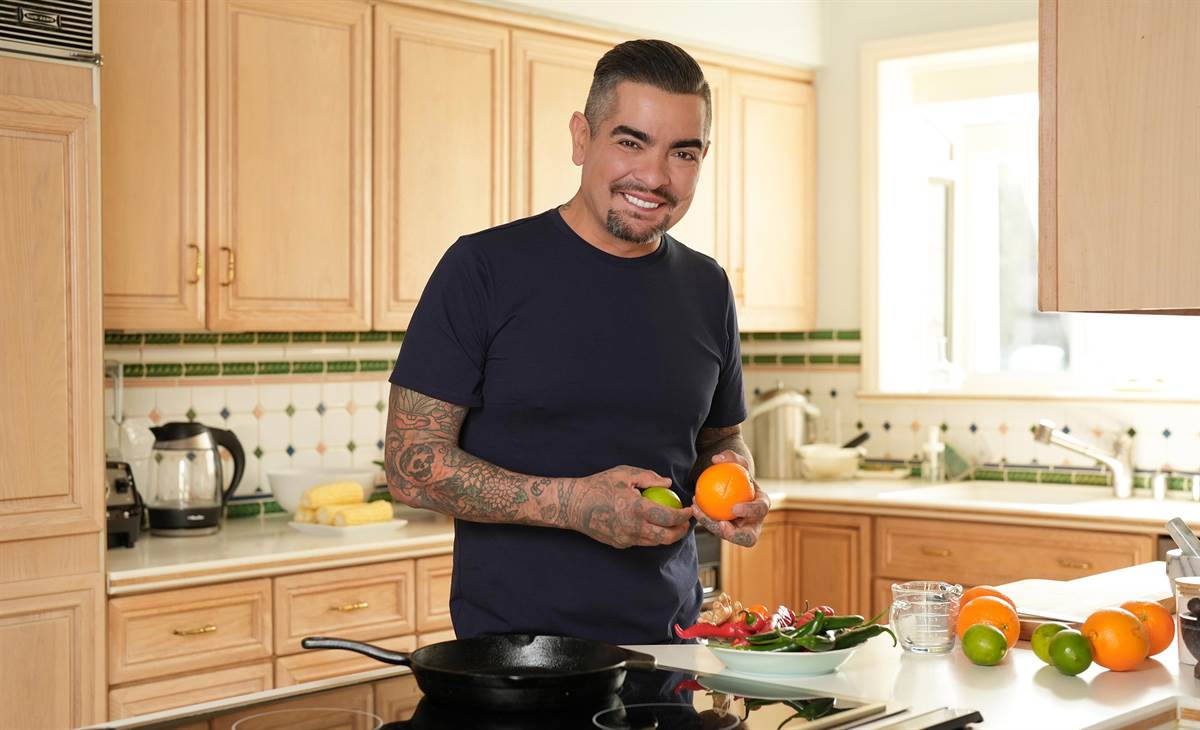
A candid conversation with Chef Aaron Sanchez about heritage, authenticity, and the stories shaping neighborhood cuisine.
While many people know Aaron Sanchez for his popular restaurant Johnny Sanchez, his Food Network appearances, and being a judge on MasterChef, the thoughtful and talented chef has spent decades honoring and celebrating Mexican cuisine. In his latest program, La Comida del Barrio, through his Cocina platform, each episode delves into the stories behind the people who make these neighborhood institutions an essential part of the community.
Over 20 years ago, Sanchez released the cookbook La Comida del Barrio. Long before Americans widely appreciated moles, pozoles, and even the beloved Chiles en Nogada, Sanchez sought to guide home cooks through the traditions and stories woven into every ingredient on the plate.
While that younger chef took liberty with the classics, the modern interpretations were a thoughtful entry into the vast and varied world of Mexican cuisine. What has remained constant in Sanchez’s celebration of his culture is his willingness to highlight authenticity.
In Cocina’s series La Comida del Barrio, Sanchez opens the door to the neighborhood restaurants that have stood the test of time. It is more than just delicious food enjoyed at the table. The people, their stories, and their dedication to the culture of cooking make these meals even more memorable.
During a recent conversation with Chef Aaron, he explained why now is the right time to highlight these neighborhood communities and tell their stories. His answer was heartfelt:
“It commemorates over 20 years of my first cookbook, La Comida del Barrio. As a chef, you evolve, you remember all those beautiful life lessons that you have had through food. (With this series), I wanted to see how much things have not changed and how they have evolved. All those things inform me and my cooking.”
While many things have evolved, other core sentiments have never changed. Throughout the food world, people long to make deeper connections. Understanding the past, applying it to the present, and adapting it to the future are vital concepts to keeping communities connected.
For Chef Aaron he wants to celebrate the authenticity of food and the chefs who put those plates on the table. Since he has a platform, he uses it to highlight these people, locations, and stories. His purpose is to ensure that generation after generation have both the knowledge and the access to them.
As he explained, his interest in this area has grown over the years. By stepping back from being front and center on camera, he has put other people’s stories in the spotlight. Mom-and-pop restaurants are even more vital in today’s food world.
In a way, those sentiments can be seen in Chef Aaron’s approach to cooking. He admitted that his younger self would try to reinterpret Mexican food with modern techniques and complicated approaches. Today, he goes back to what made those flavors rich with tradition.
Chef Aaron said, “As I’ve gotten older, I’ve come back to Grandma’s kitchen. It speaks to me as a chef, especially where I’m at in this juncture of my life.”
“I think back to those beautiful one-pot dishes that my grandma made. I think that it is essential to get back to our roots. It is what La Comida del Barrio is about. Through our company, We Are Cocina, we speak to where we are now, and it is an appropriate time to do so.”
That concept of “where we are now” is seen in every episode of La Comida del Barrio. In addition to both the humble and the creative food served, the choice to seamlessly switch from English to Spanish and back again is a celebration of Mexican culture.
Chef Aaron believes that this “hybrid” scenario is an example of how this Latino generation and community operates. He has found a way to disseminate information, be inclusive, and push the conversation forward. Whether it is the words spoken or the food on the table, the community has multiple ways to communicate the past, present, and future.
While Chef Aaron encourages everyone to explore the vast and diverse community across the nation’s barrios, there is one person he recommends engaging with. He said, “Always engage the elder. Whoever is on the counter, who is cooking, they have the insight.”
That willingness to ask a question, start a conversation, and learn is vital to keeping these stories and traditions alive. Whether it is in the heart of Los Angeles, in Chicago’s Pilsen neighborhood, or in a small farming town, authentic, real, and relatable stories are shared around the table over memorable and meaningful food.
What is the takeaway from La Comida del Barrio? Heart and heritage are ingredients that cannot be found in a cookbook, but they are essential to real, authentic, and memorable cuisine. Chef Aaron Sanchez serves that culinary lesson for all generations because we are all connected through food.
Tags: aaron sanchez, la comida del barrio, mexican cuisine, food culture, culinary interviews