Mona Fastvold, Amanda Seyfried, and Brady Corbet introduce the bold Venice-nominated musical drama to Paris audiences ahead of its French release.
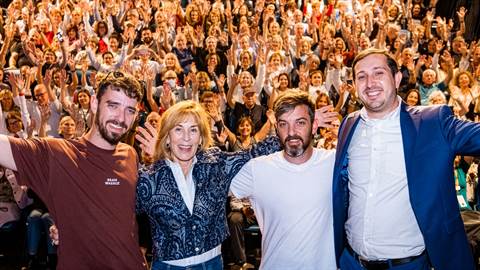
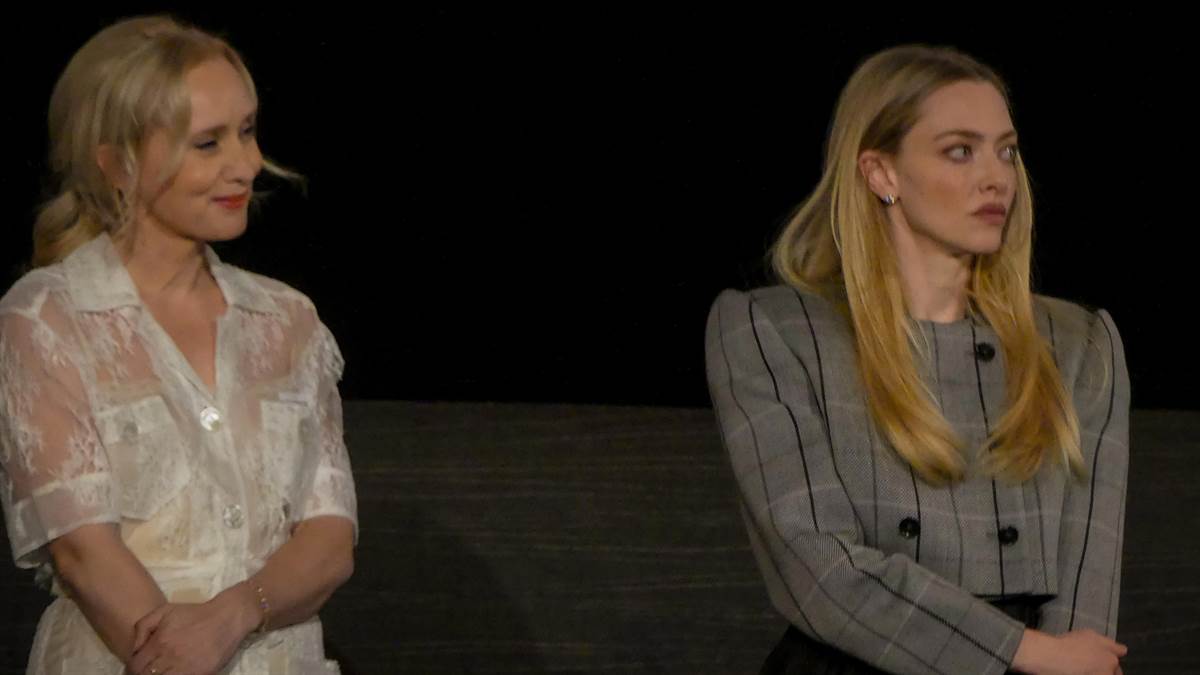
The Max Linder Panorama welcomed an attentive Paris audience Tuesday evening for the premiere of The Testament of Ann Lee, the latest feature from director and co-writer Mona Fastvold. Joined on stage by lead actress Amanda Seyfried and co-writer Brady Corbet, Fastvold introduced a film that has steadily gathered momentum since its Golden Lion nomination at the 82nd Venice International Film Festival.
The atmosphere inside the historic boulevard theater felt less like a routine stop on an international rollout and more like the unveiling of something carefully guarded. Industry guests, press, and cinephiles filled the house, many already aware of the film’s reputation following festival stops in Toronto, London, Chicago, and EnergaCAMERIMAGE.
Fastvold explained that the origins of the project were unexpected, emerging during research for a previous film.
Mona Fastvold: I was researching for my last film when I came across a hymn written by a formerly enslaved person. That led me to the Shaker community. I realized this was a radical and overlooked part of American history, led by a woman, which is unusual. I felt this was a story that needed to be told.
The film chronicles the life of Ann Lee, the founder of the Shaker movement in the 18th century. Structured in three chapters, it traces Lee’s early hardships, her migration to America, and the formation of a utopian religious community. Seyfried’s performance has already drawn significant critical praise, frequently described as one of the strongest of her career.
On stage, Seyfried emphasized how central Fastvold’s conviction was to her own commitment to the role.
Amanda Seyfried: It really started with Mona. My devotion to Ann Lee grew over time. Mona embodies her conviction and clarity. I felt like there was no one else who could tell this story the way she has.
Corbet noted that their intention was never to dismantle the figure at the center of the story, but to approach her with empathy and seriousness.
Brady Corbet: We were not interested in deconstructing an icon. Ann Lee was mistreated and abused throughout her life. We did not want to kill her a second time. We wanted to approach her story with real empathy and explore the utopian experiment she helped create.
Shot primarily on 35mm and later blown up to 70mm, the film’s visual texture is shaped by cinematographer William Rexer’s painterly approach, drawing on classical chiaroscuro influences. Production combined European studio work in Budapest with locations tied closely to Shaker history. Choreography by Celia Rowlson-Hall, paired with Daniel Blumberg’s score, fuses ritual and movement into a cinematic language that resists conventional musical structure.
Rather than following the expectations of a traditional historical biopic, the film leans into an experiential tone. Fastvold immerses the audience in Ann Lee’s psychological and spiritual reality, allowing sound, movement, and image to carry emotional weight as much as narrative progression.
After a limited 70mm U.S. release beginning December 25, 2025, through Searchlight Pictures, the film expands internationally. It arrives in French theaters on March 11, 2026, via The Walt Disney Company France.
The Testament of Ann Lee stands as an ambitious fusion of historical drama and experimental musical storytelling. In Paris, the reception suggested audiences are prepared for its challenge, and perhaps its quiet provocation.
Tags: paris premiere, film festival, historical drama, musical film, amanda seyfried