Warner Bros. Discovery’s pivot to Paramount Skydance delivers one of the largest breakup payments in media merger history.
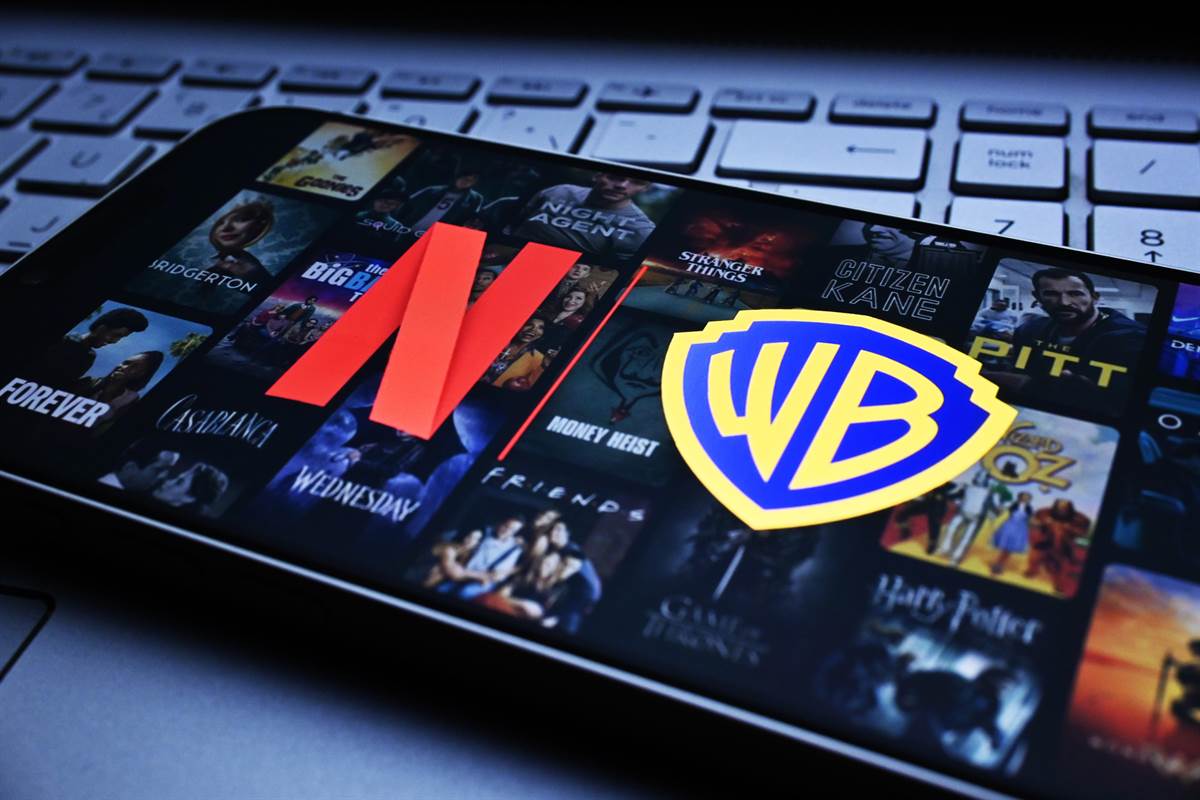
Netflix is now $2.8 billion richer. The streaming giant revealed Friday that it has officially received the massive termination fee from Warner Bros. Discovery after the studio formally walked away from their previously announced merger agreement. The payout was triggered by a “superior proposal” from Paramount Skydance, which WBD’s board accepted, effectively ending Netflix’s largest-ever acquisition attempt.
In an SEC filing, Netflix confirmed that the deal is officially dead, saying, “On February 27, 2026, WBD provided notice to Netflix that it had terminated the Merger Agreement in accordance with its terms in order to enter into an Agreement and Plan of Merger with PSKY in respect of such Company Superior Proposal. Concurrently with the termination of the Merger Agreement and entry into such agreement between WBD and PSKY, PSKY, on behalf of WBD, paid the $2,800,000,000 termination fee owed to Netflix in accordance with the terms of the Merger Agreement.”
The breakup fee ranks among the largest in media merger history and dramatically reshapes the financial outcome for Netflix. Instead of absorbing Warner Bros. Studios and HBO Max in an $83 billion cash deal, Netflix now walks away with billions in fresh capital and renewed investor confidence.
Wall Street’s reaction was swift. Shares of Netflix surged nearly 15% by Friday’s close, building on a 10% gain the previous day. The rally signals relief among investors who had never fully embraced the December announcement that Netflix would pay $27.75 per share, roughly $83 billion, for WBD’s film studio and streaming assets.
From the start, shareholders questioned whether the acquisition made strategic and financial sense. Concerns centered on integration risks, the burden of combining two large content operations, and whether Netflix was stretching too far into legacy media at a time when streaming competition is intensifying.
With the deal now terminated, Netflix appears to have regained its footing. The stock, which had dipped as low as $75 amid deal uncertainty, has rebounded to around $96.
Paramount Skydance’s aggressive campaign played a decisive role in the outcome. Shortly after Netflix announced its December agreement, Paramount launched a hostile tender offer for Warner Bros. Discovery and spent months attempting to dismantle the transaction. Its revised proposal ultimately convinced WBD’s board that it offered greater value.
Under the merger agreement, Netflix had four days to submit a counteroffer. Instead, the company chose not to engage in a bidding war. In a pointed statement, Netflix emphasized that the acquisition was never essential at any cost.
Netflix: This transaction was always a “nice to have” at the right price, not a “must have” at any price.
By walking away rather than escalating its bid, Netflix preserved financial flexibility and avoided a potentially expensive showdown. The $2.8 billion windfall strengthens its balance sheet and provides additional resources for original programming, international expansion, or share repurchases.
For Warner Bros. Discovery, the future now lies with Paramount Skydance and the integration challenges that follow. For Netflix, however, the narrative has shifted from risky overreach to disciplined restraint.
Tags: netflix, warner bros. discovery, paramount skydance, media merger, streaming industry