
FlickVision Interview
Cocaine Cowboys: The Kings of Miami Interview with Director/Producer Billy Corben
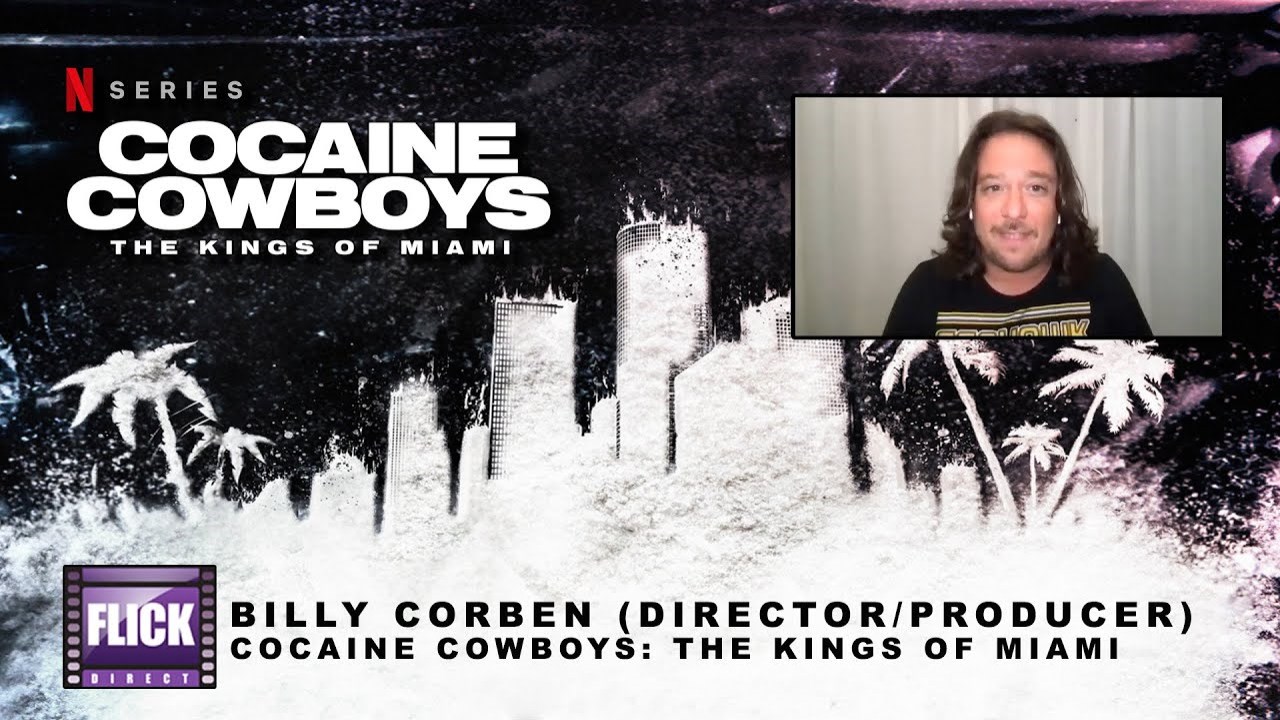
Director Billy Corben once again revisits his acclaimed documentary series, Cocaine Cowboys: The Kings of Miami, which offers insight into the world of drug dealers Augusto "Willy" Falcon and Salvador "Sal" Magluta. With new interviews and footage, Corben discovers a different angle to talk about in the 6 episode Netflix series Cocaine Cowboys: The Kings of Miami
Read transcript
Automatically transcribed; may contain errors.
let's talk about cocaine cowboys first of all i love the title but um this was originally a documentary from 2006 that was at the tribeca film festival got lots of accolades why revisit it yes so we have made this is now the fourth title in the cocaine cowboys franchise but it was the first story that we wanted to tell so back in the early zeros when we had made the decision to tell the story of you know the the uh the battle good old days uh in miami during the cocaine boom and how the narco dollars from that trade uh really trickled down in the in the only successful case study that i'm aware of of reagan's trickle-down economics into sort of every facet of our economy legitimate business and illegitimate business and eventually built the skyline of of miami um we wanted to tell the story of willie falcone and sal magludo or as we knew them in miami growing up willian sal los muchachos the boys miami knew them by their first names you said willie and sal nobody went willy who sal who everybody everybody knew who you were talking about i think someone says in the documentary there may be six degrees of kevin bacon but in miami there's only one or two degrees of willie and sal you knew them or you knew someone who knew them and um and so you know their trials um their first trial was when we were in middle school and then high school and then all the way up to college at the university of miami we followed this story and so when we decided to to do cocaine cowboys originally we wanted to do this story but you know the sal magluta's second trial had just ended it just the story hadn't ripened yet you know there was a lot of fresh wounds and and pete and people just didn't want to talk on camera at that time so cocaine cowboys your reference from o6 was really our plan b it was our back out plan and we just hope we hoped that if people dug it and uh wanted more of that kind of story that maybe someday we'd have the opportunity and here we are full circle and why this many episodes why and why go with netflix why not do another film so to speak yeah that's a good question um first of all um we started to get access to people uh one woman marilyn vonachea was fresh from witness protection when she reached out to us and asked if we were interested in telling her story and and we were enthusiastically so uh those are the interviews a series of interviews that that are in the documentary with marilyn and um what happen was is that we kind of like as a labor of love on spec in between paying gigs we get access to an interesting person a co-conspirator a cooperating witness a criminal defense attorney an fbi agent a you know former u.s or assistant u.s attorney and we accumulate what amount really was like a an archive you know of of interviews on this story and we quickly realized there was just we knew the story was big we didn't know that we would get enough you know sufficient access to tell it we got sufficient access to tell it and we're now like well this can't be contained in a one-off two-hour feature documentary but a documentary series had not been invented there was no such thing there was no such thing as it that you were either making a feature dock right two hours or you were doing like american green you know like a thousand episode type but there was no such thing as like a six unless you were ken burns but ken burns he's his own genre he's you know he gets he gets to do his own thing but no one said like oh you can make an eight-hour documentary that wasn't a real that wasn't a real there wasn't a business model for that you know and so and then there was a one-two punch while we were working on this for so long of the jinx on hbo and making a murderer on netflix and suddenly the documentary series was born and and we were like holy [ __ ] we can now there's a market for for telling this story in six seven eight hours and and the truth is is that cocaine cowboy is the original three documentaries which all follow the same kind of basic you know characters and storylines this is an all-new uh thing that you don't have to see any of the previous ones to to understand or appreciate but uh or follow more importantly but um you know we um um i want to catch i have to catch up with my own thoughts because i'm giving you i'm giving you sort of exposition and storytelling all this all at the same time i'm firing on all cylinders but um you know this um the opportunity to do it with netflix was particularly exciting because as cocaine cowboys will say blew up first it was in the it was on bootleg in the hip hop community in the flea markets of miami gardens in carroll city in the barber shops um we started hearing from extraordinary talents like pitbull and dj khaled and pharrell and janet jackson and artists like nicki minaj started to name check some of the characters like griselda blanco la madrina the godmother in their in their uh song lyrics um and we realized that this was like it's a thing it's kind of catching on and it had different lives different cycles it was the bootleg market it was on legit dvd it was on show time but really when it when it came to netflix i feel like that's where it it exploded like it just you know there was people in countries all over the world who were seeing it who um never would have seen it on bootleg or on a you know on showtime or cnbc so that to me was like really where the audience was and now here we go and as evidence of course after cocaine cowboys there was narcos there was a you know a real uh you know the ubiquity of this kind of of content and um so to kind of bring it home to netflix what was important and i mean a release in 190 plus countries in 30 plus languages there's not a lot of places where you have uh that that kind of opportunity and i'm very grateful to them for it yeah absolutely you bring up a good point though um you know if you grew up in miami you knew who they were you knew the stories you saw their victims on the nightly news whatever but if you're in another country how much of an appeal is there for people to watch their story that's a great question like we listen the stories that we've told have been uh and our company iraq and tour have been predominantly miami-centric at least floridiana by and large um you know i call her genre florida [ __ ] uh you can you can uh you know so um and you could uh argue that that could be provincial you know right well what would be the interest outside of of of south florida or florida itself or the united states for that matter um and we found quite the opposite i mean we found that the interest in uh in florida [ __ ] the interest you know miami is an international city you know they say that the uh the great thing about miami is it's so close to the united states um and so you know you know really what we have what we've had as an opportunity being miamians native floridians and lifelong miamians is to tell the stories of this community that as it turns out what we've discovered over over 20-year careers as documentarians uh is they're of apparently great international uh interest there is an audience for uh what is happening in miami uh all over the place um i think miami is just a place that um you know everybody wants to go or everybody loves to hate or ever you know so i i just think it has a real reputation um you know thanks in no small part to the pop culture that has come before you know like scarface and miami vice and bad boys and a lot of the stuff uh through the 80s and 90s very very true that's a good point uh why documentaries overall as opposed to not making a novel into a feature film or well i mean it keeps me off the streets you know it's either this or or midnight basketball games at the y i suppose um you know idle hands and all that but like no i i you know what's funny i'm gonna i'm gonna totally strawman this but like you know people often will say to me like they'll go um uh are you are you ever gonna make a real movie you make documentaries what do you but are you ever gonna make a real movie and i'm like a real movie i'm like you mean with like a script with made up words and act and actors pretending to be other people and and set and sex that aren't real make you mean a fake movie i'm like i make real movies i make documentaries what could be realer what how can you be keeping it more real than than documentaries and non-fiction filmmaking and you know we were trained as filmmakers we never trained as documentarians so um documentaries you know with the advent of of of digital technology in the um in the late 90s and early zeros it really kind of democratized production it made equipment more accessible for indie filmmakers and on video it seemed to us would be more logical at that time to instead of doing scripted uh stories on video which didn't quite feel right yet we you know hd hadn't you know wasn't a thing yet and so um we thought that it would be ideal to do um basically you know television journalism essentially you know because people were accustomed to seeing the format of video in in documentary style so that's what we decided to do and and um and really i mean to be perfectly honest our careers we wanted to make movies we wanted to tell stories we wanted to tell stories about our hometown and where we came from and kind of explain why it was the way it was why it has the reputation it does explain some of the mysteries from our childhood like why did everybody have so much money in the 80s when we were kids you know like during like a recession like how did that happen um you know and um so i i think that you know uh we wanted to make movies and and i think that that's reflected also we call our genre pop docs um it's not that they're it's not that they're not socially conscious or not not politically uh uh uh conscious but like but we we we take the responsibility seriously if it's not just what you say it's it's how you say it and and we have an obligation to entertain an audience particularly over six episodes you know there needs to be there needs to be substance and there needs to be facts but there needs to be style um that that that serves the story well and that is aesthetically consistent with the milieu and the era and the characters uh that keeps the audience uh engaged so so you know it's sort of accidental that we fell into this more or less on the eve or a decade ahead of what i think is now an absolute golden era of non-fiction filmmaking and the ubiquity of just of documentaries it's wonderful is there anyone you mentioned um and now i can't remember her name the one from witness protection um uh marilyn bonita right was there obviously she is someone that you weren't able to discuss pre or talk to previously is there anyone still in this story that you are not able to speak to that you would like to speak to well you know we not really i mean you know sal i've talked to on the phone a lot he's in he's in in prison there's no cameras in federal prisons i think timothy mcveigh on 60 minutes was probably the last interview in a federal prison ever conducted on camera you'll hear audio interview you know telephone interviews is not uncommon um uh but i'd love to sit face to face with with sal magluda um i just think he's a very compelling figure um and asked him about some of the decisions he made pretty rare some of which were pretty reckless um and you know and and um but for the most part i will tell you you know we over the the course of this edit you know getting it down to shape and size and getting the right pace and the right story beats we cut out the equivalent of probably two whole episodes so so it's not so much that there's more people that i'd want to talk to or have access to but there's there's still more story uh that that could tell so maybe if people watch it uh netflix will order more uh more episodes some bonus episodes for you season two [Laughter] i'm curious because of the subject matters that you tend to choose for your documentaries how safe do you feel oh honestly i think antagonizing and telling the truth about politicians on twitter is more dangerous perhaps than they the documentaries uh that we do um but uh you know i i think it's it's uh i think miami you know some people because we live in miami you know and we tell stories about miami sometimes very dangerous people about miami this one in particular has a pretty interesting twist slight spoiler alert you know that willian sal had a lot of compromise on a lot of people and uh you know people in the public sector and the private sector and law enforcement people who were probably still out there today possibly still in positions of of authority or power elected or law enforcement or criminal the criminal justice system and they were never brought to justice they never paid a price they they were some of them consciously and actively involved in a major uh cocaine trafficking conspiracy and and and they they all they just never uh had any consequences whether it was property or money seized or prison time um and so i suppose some of those people might be upset uh about this um you know the reality is is that uh miami is is like america's casablanca it's uh you know it's a it's a sunny place for shady people so um you know i i i think that um i think that uh getting up in the morning and and walking outside and driving your car in miami is a dangerous proposition for for for everyone is it more dangerous for me maybe marginally so all right well that's good and what's next for you what are you looking forward to working on now what ideas are there i'm gonna i'm gonna work on a nap for about two weeks is what i'm gonna is that's my current project in development um we are in pre-pro right now but i'm slowly slowly you know falling off off-screen no we we have the amazing thing again about this golden era of of documentaries is that we have a ton of projects and so um none of which i can i can talk about or are share at the moment um but i look forward i look forward to sharing them with you very soon excellent all right we will discuss them when they get to the finish stages well i'm gonna let you go take your nap thank you so much for speaking with me and i find documentaries fascinating i find criminal elements fascinating don't ask me why um so this really appealed to me and i really enjoyed it so thank you i had you pegged as a true crime uh the buff i had you pay thank you no i was only kidding i didn't i didn't i didn't but but thank you and thank you for covering it i appreciate it yeah absolutely you have a great day and it's on netflix and everybody should check it out [Music] you

ABOUT THE INTERVIEWER

ABOUT COCAINE COWBOYS: THE KINGS OF MIAMI
Fifteen years after the release of his cult classic film comes director Billy Corben’s Cocaine Cowboys: The Kings of Miami, a six-part saga on the South Florida traffickers indicted in one of the largest drug cases in U.S. history. Alleged to be the chief U.S. distributors for two of Colombia’s biggest cartels, Cuban exiles Augusto “Willy” Falcon and Salvador “Sal” Magluta were accused of smuggling over 75 tons of cocaine into the U.S. in the 1980s. The high school friends built a reputed $2 billion empire that made Willy and Sal, aka “Los Muchachos,” two of Miami’s biggest celebrities. While law enforcement plotted their takedown, the world champion powerboat racers managed to skillfully outrun and outmaneuver prosecution for decades before the chase finally came to an end. Featuring colorful interviews with those closest to them, their defense team, and the Feds tasked with taking them down, the series paints a vivid portrait of the last of Miami’s “cocaine cowboys.”
Directed By: Billy Corben
MPAA Rating: TV-MA
Genre: TV/Streaming Series, Documentary
Distributed By: Netflix

Cocaine Cowboys: The Kings of Miami is © Netflix. All Rights Reserved.