The newly elected DGA president warns against extended contracts amid rapid industry change
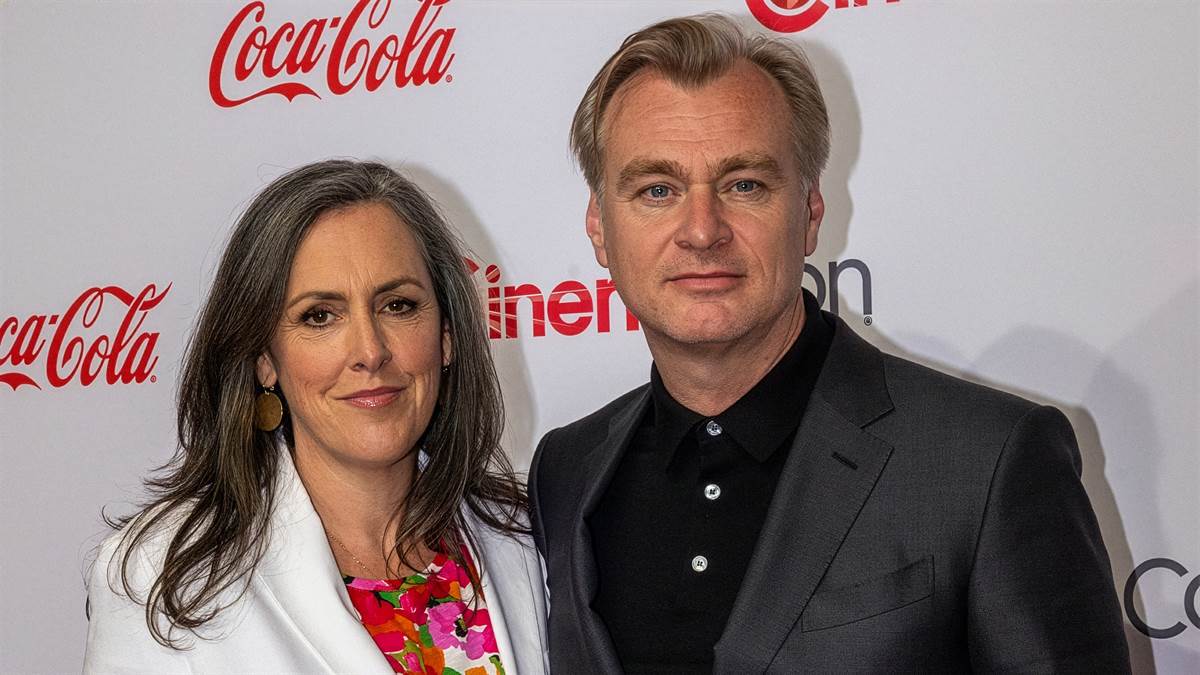
Christopher Nolan, the newly elected Directors Guild of America president, is pushing back against the idea of long-term labor deals as Hollywood unions prepare for a new round of negotiations with the studios.
Asked whether the DGA would consider extending its collective bargaining agreement with the Alliance of Motion Picture and Television Producers beyond the standard three-year term, Nolan struck an open but skeptical tone.
“Well, the DGA prides itself on being open to discussing anything. I don't think a five-year extension is in any way a realistic proposal, and I think the AMPTP probably knows that,” Nolan said.
The DGA, along with the Writers Guild of America and SAG-AFTRA, will negotiate new contracts in the coming weeks. All three unions are grappling with financial strain on their health and pension plans after drawing from reserves in recent years. While the DGA’s plans are considered the strongest of the three, leadership has acknowledged the need for higher employer contributions.
It was also reported that studios may offer a substantial cash infusion into the unions’ benefit plans in exchange for longer contracts. Nolan emphasized that no formal proposal has been made and warned against locking in extended agreements amid rapid industry change.
“If we had agreed to a five-year contract in March of 2020, where would we be now? We are living in an industry where things are shifting very, very fast… and there are no assurances they’d be able to give us on how that’s settling down,” Nolan said.
“They’re continually subject to turbulence in the marketplace,” he added. “So, we have to balance being able to renegotiate at the appropriate time… that seems very, very unlikely.”
He also rejected the idea of tying contract length to healthcare funding. “I think tying it to healthcare seems inappropriate, frankly,” he said.
In a November letter to members, Nolan and DGA National Executive Director Russ Hollander warned that the guild’s health plan “has run negative for the past two years, and those losses are projected to increase significantly in the future.” Nolan confirmed the DGA has already made cuts “to be realistic about rises in healthcare costs.”
“With collective bargaining, the employer contribution becomes fixed for the term of the contract,” he explained. “So… that’s had to be paid for from the reserves.”
Despite encouraging signs that the AMPTP recognizes the issue, Nolan was blunt about the solution. “The employers are going to have to raise their contributions. That’s just a fact of life,” he said.
Nolan pointed to gains in streaming residuals from the 2023 contract as proof that compensation models can evolve, but warned that innovation often comes with pressure to reduce pay.
“One of the things that happens with disruption… is—whatever the merits of those models—they tend to come with the ability or the desire to pay us less,” he said, calling residuals “the lifeblood of our industry.”
As chair of the DGA’s AI committee, Nolan stressed that protections must go beyond meetings. “We have excellent protections, but that’s not enough. You have to have a voice in how this tool is used moving forward,” he said.
He cited Disney’s OpenAI deal as a test case. “I see that as a positive in terms of establishing the principle of licensing,” Nolan said, “but until we see how that’s going to be paid through to the union members… we don’t know what that’s going to be.”
Nolan also reaffirmed support for a federal film tax incentive, proposing a stackable 25% rebate to compete globally. While skeptical of ideas like tariffs, he said the renewed attention has sparked more serious discussion.
“If you look at the overall spending from a consumer… it’s extremely stable,” Nolan said. “But we’re looking at a 35 to 40% decline in employment for our members last year. How do you reconcile those things?”
Tags: film industry, hollywood labor, directors guild, cinema economics, filmmaking news