
FlickVision Interview
Sitting in Bars with Cake: Trish Sie Unveils the Delicious Details
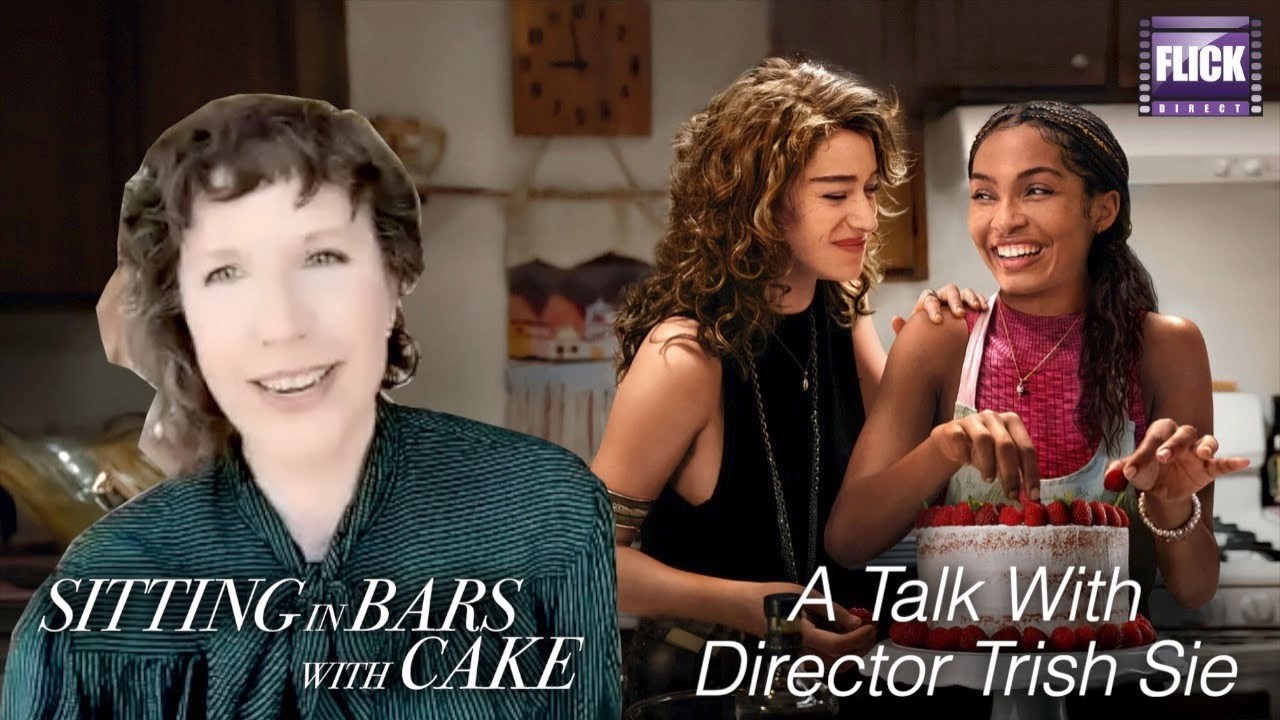
Get a slice of behind-the-scenes magic as we sit down with Trish Sie, the visionary director behind "Sitting in Bars with Cake". Interviewed by Allison Rose, this exclusive chat takes you into the creative kitchen where the film's core ingredients were mixed. From conceptualizing the plot to aligning the cast, we delve into the art of cinematic baking.
Secondly, Trish Sie discusses the challenges and triumphs she faced during production. She opens up about the pivotal moments that shaped the narrative and gives insights into the storytelling techniques that make this film a must-watch. Hear firsthand accounts of what it takes to whip up a film as engaging and delightful as a piece of cake.
Lastly, whether you're a film aficionado, a fan of romantic comedies, or someone who just loves a good story well told, this interview is your ticket to the inner workings of a movie masterpiece. Don't miss this sugar-coated discussion about film, creativity, and the irresistible allure of cake.
Chapters:
00:00:00 - Directing Style Inspired by Dance and Choreography
00:01:48 - The Magic of Choreographed and Ad-libbed Scenes
00:03:25 - The Unexpected Journey of Life
00:04:46 - Working with Yara and Odessa in "Jane"
00:06:14 - The Characters in Curran's Life
00:07:40 - Exploring the Characters' Personalities
00:09:18 - The Intensity of Filming
00:10:57 - Working with a Professional and Creative Partner
00:12:38 - The Cake Making Process
Interview chapters
- 00:00:00 — Directing Style Inspired by Dance and Choreography
- 00:01:48 — The Magic of Choreographed and Ad-libbed Scenes
- 00:03:25 — The Unexpected Journey of Life
- 00:04:46 — Working with Yara and Odessa in "Jane"
- 00:06:14 — The Characters in Curran's Life
- 00:07:40 — Exploring the Characters' Personalities
- 00:09:18 — The Intensity of Filming
- 00:10:57 — Working with a Professional and Creative Partner
- 00:12:38 — The Cake Making Process
Read transcript
Hi, I'm Allison with FlickDirect and I'm speaking today with the director of Sitting in Bars with Cake. Hello, how are you? I'm great, how are you? I'm good. So, Trish, your background is in dance and choreography and music. How does that translate into your directing style? You know, I think that all of us, whether we're dancers or choreographers or not, are very used to communicating through body language, through rhythm, through movement, levels and layers and the way space works and the way shapes work and the way a person's face is moving and body's moving and where the pauses come, you know.
So to me, it's all part of that dance and being able to sort of block a scene or even the way the edits work, coming from a sort of dance and music place just makes it, I think, easier to use that language visually because I think it's kind of universal whether we are trained in it or not. And it's kind of a good shorthand. - Do you think you frame shots differently because of your background?
- Maybe, I like to see more body than a lot of directors do. And I know now a lot of people watch their movies on smaller screens. It's quite, you know, let's face it. It's quite common to do like singles and really tight faces. And sometimes you really want to see the choreography and the movement and the nuance of expression in someone's face. But a lot of times so much is happening in their body or even in the room around them that I love to see that.
I also love like a swinging single where you're moving from one person to the other. And sometimes the camera operators, we will choreograph when those moves come. And sometimes we just let them swing, you know, according to their own intuition. and especially if the actors are ad-libbing a bit or changing up their performance, it can really create a kind of magical, unexpected quality that feels very, I think, alive compared to a real static framing.
So I also like to put multiple people in a frame for that same reason. I know it can be a continuity nightmare, but it's nice to see, you know, or at least feel how that person's reacting. 'Cause I think sometimes we don't see it or notice it consciously, but just seeing the intake of someone's breath or a little tightening up or a hand move or a hair thing says so much to us just subliminally.
So I really love to jam as much into a frame as possible. - I wanna talk about the book and the screenplay now. - Okay. - What flavors, pun intended, did you wanna bring out most in the film when you read the book and the screenplay? - Well, I think the thing that shocked me the most about the screenplay was the depth of love between these characters.
'Cause the book reads as quite a fun, just kind of jaunt through LA's hotspots. And the first half or third maybe of the movie also feels very just kind of fun and frothy. And I love all of that kind of stuff. I've made a lot of frothy stuff in my time, so I'm all for that. But I was kind of pleasantly surprised that it took this deep dive. And I do think that's how life feels is everything's this way one day and it's this way the next.
And it may not be formulaic and it may not be predictable but that's kind of what drew me to it was how like, oh, it caught me completely off guard. I had no idea that was coming and I had no idea I would respond the way I did. So I don't know that everybody's gonna love that feeling but I did. That was to me when I was like, I wanna make that movie because I did not know where that was going.
And it's been a long time since I read a script where I didn't know where it was going. - So tell me about them. What about them you really liked? What made you think, yes, this is the perfect person for this role? - I do not have enough good things to say about these two women, both as human beings and as actors. They're so good at what they do, but they're also just really warm, generous, good-hearted and hardworking people.
They do really love each other. And I think that really helps because none of this was an act. I mean, they are very good actors and they don't really resemble their characters all that much, but their affection for each other and their sort of easy rhythm with each other is all them. They had that from day one. We cast Yara first, 'cause I've been dying to work with Yara since she was a little girl.
I know her family well, because her dad and I used to do commercials together. He's a cinematographer. And so I've watched Yara grow up, and I just think she's such a fabulous actor and such an interesting and smart person with this just kind of grounding rod of dignity and quiet sort of intelligence about her. So I was dying to work with her. So we hooked her, and then she helped us, especially as a producer on the film, she helped us cast for the role of Corinne.
And we looked at a lot of people. there's so many talented young women and so many fabulous actors, lot of good auditions and chemistry reads. But when Odessa came in, it was like, it was kind of like a mic drop. There was not really any, nobody could really look at anybody else after that. She was just so good and they were so good together. So, you know, I think a lot of, 'cause because this whole movie hinges on their friendship and the believability of it and the, you know, the aspirational quality, like we all want a friend like that and a friendship like that, we needed to have it work.
And I'm just so grateful to them for kind of just putting their hearts out there for each other. And they really did. - Yeah, and it comes across on screen beautifully. It actually made me think about some of my friendships that way. - Yeah. I mean, I feel like we all hopefully have a Jane in our lives and a Corinne. No, or we go back and forth. There are some friends where we are the Jane Are we, some days we're the Diana, some days, you know, but that dynamic I think is really familiar to a lot of people and yeah.
- I wanna talk quickly about the adults because Ron Livingston, Martha Kelly and Bette Midler. I feel like they, their characters represent different ideas in Curran's life. The mom is very, she's a little pragmatic and, you know, okay, this is what we're doing to get things done. Dad's a fixer, but he can't fix his daughter. And then the boss who's kind of out there and crazy, but also a big marshmallow inside.
So tell them, especially Bette Midler, 'cause I love Bette Midler. - Oh, you and me both. She's the best. Yeah, I love that you picked up on that. That's exactly right. You know, I obviously you don't have a lot of screen time to do a whole, you have to show things very, very quickly and people have to see the patterns and apply them across, you know, stuff that they're not gonna actually see happening on camera.
So we tried to be as careful as we could about what we were showing and not have them be cardboard cutouts, but we just didn't have much time with them to show what was happening. So yes, Bette Midler's character, we imagined her also kind of seeing in her, in Corinne, a young Benita, you know, seeing like that was me at one point and being very, you know, she doesn't have children of her own, presumably, Bette and I talked about that.
Like this woman probably was like a rock star at one point, like a Lita Ford type, like whatever. Now she's an agent. She doesn't have kids of her own, but she's got this like nurturing sort of mother side in there underneath that tough exterior. And she likes these women and she likes seeing them come up in the world. And she's, yeah, she's not just like the frigid ice queen.
You know, she's soft. And then, yeah, the parents, we wanted to make, we were like, you know, so often the child kind of resembles the parents, but then makes choices to really be different from them. And so we wanted to also show that where they have, there's a sort of silliness about the parents. Like at the one scene when Ron Livingston wears the heart sunglasses and like he's always being a little goofy, but also, you know, he, like you said, he's kind of a control, he's always trying to fix stuff and he's always trying to solve stuff.
And there is a little of that in Corrine as well. And with the mom, there's that sort of dry, dry, dryness to her that I think while Corinne doesn't necessarily have that, I can picture where a dry, stoic mom like that informs a daughter like Corinne, who's a little bit more out there and just a little bit more explosive emotionally. So it felt like something that would happen in real life, but you don't have a lot of time to show it.
So you gotta just hope people can read between the lines. - Yes, I definitely did on that. Tell me working on this film, how did it change your perspective on your work, on your life? Because it had to have, honestly. - This was the, yeah, this was the most intense filmmaking experience I've had. This movie has such heart and such gravitas, and given that it's a true story, I felt such an obligation to treat it so respectfully and tenderly and take such good care of it.
And so, you know, I was just really honored to get to do it and honored that they would trust me with it. So glad that our cast was so, so emotionally available and ready to just go there. They were all so nice to each other. They were so supportive and gentle with each other. Our crew was like incredibly respectful and supportive emotionally too. I mean, like even, you know, people who you would assume were just kind of hard and throwing cable around the background were so sort of like there emotionally for everybody.
And it was really kind of a special magical thing. It'll be hard honestly to make anything that sort of flippant again, 'cause I really put my heart out on this one. And, you know, I'm usually kind of sarcastic and I make kind of silly, kind of silly stuff. And I, you know, it was a great privilege to get to do something that had, you know, had this much sort of soul to it.
So I don't know what that will do to me. We'll see. - We'll see in the future. Talk to me a little bit about Audrey and how she, what she brought to your production. - Audrey is a phenomenal person. Not just because she can bake these kind of cakes and write this kind of story and live this kind of experience herself, But she was able to stay so professional.
Like she never let her ego or her own grief about the situation, or, you know, she was just always able to be so creative and objective. Like maybe objective is the wrong word because she had opinions, but like she was able to just stay so in her role as we're gonna make a version of this that's gonna work with the situation that we have. And she didn't get precious about anything.
She was so, such a good partner and she's really, really funny. And I just think she's, one of the like sweet, I don't know if that woman has a mean or like salty bone in her body. She's just sweet, sweet, sweet, but smart. And I just, I was really impressed mostly by her ability to, when we had to fictionalize something or we had to leave something out, or we had to change something.
She was just like, got it, let's do it. And she would give me ideas about how to do it. And she was just so practical, but in a really creative way. - Even though this is her story, she was willing to create kind of a different story for it as well, which obviously is a sign of a good writer. I wanna talk about, yeah, I wanna talk about the cakes. They're like their own characters.
Yeah. How intensive was that? I know you worked with a culinary producer, food stylist, Megan, I'm gonna say her last name wrong, Patov. I'm not sure how it is. Yeah, yeah. Oh, okay. Yeah. So tell me about the cakes and that whole process. Megan is amazing. And it was a process 'cause we started probably 12 weeks before shooting. we started figuring out what these cakes needed to look like.
You know, we worked closely with our cinematographer about which bars each cake would be in. So how it was gonna be lit, what was gonna make it stand out from the background, what the girls were gonna be, women, sorry, what the women were gonna be wearing. Like we, aside from just making the cakes be delicious, interesting cakes, they had to, you know, you had to treat them as if, like you said, they were a character.
What are they wearing? How are they lit? And so, and then, you know, on top of that, we wanted there to be a variety of cakes. We wanted Jane's cake making arc to have some shape to it. If you were experimenting with cake baking, you would go through your piping stage. You would go through your fondant stage. You would go through your like, you know.
- It all works. It's wonderful. I laughed, I cried. A few tissues here and there, and it's a great film. I think everybody should see it. I'm so glad you liked it. Thank you. Thank you for your time. I appreciate it. Absolutely. Have a great weekend. Hit like, smash subscribe, and get notified for whenever reviews, interviews, and news go live! (dramatic music) (explosion) [BLANK_AUDIO]
More Interviews



ABOUT THE INTERVIEWER
ABOUT SITTING IN BARS WITH CAKE
Inspired by true events, Sitting in Bars with Cake follows best friends Jane (Yara Shahidi) and Corinne (Odessa A'zion) navigating life in Los Angeles in their twenties. Corinne, the ultimate extrovert, convinces her shy-but-extremely-talented home baker best friend Jane to commit to a year of baking cakes and bringing them to bars with the goal of meeting people and developing confidence - also known as “cakebarring.” During their year of “cakebarring,” Corinne receives a life-altering diagnosis, and the pair face a challenge unlike anything they've experienced before. Sitting in Bars with Cake isn't only a madcap joyride through some of L.A.'s most colorful watering holes, it's a moving celebration of female friendship, forging identity, and finding joy in the most unexpected places.
Directed By: Trish Sie
MPAA Rating: PG-13
Genre: Comedy, Drama
Running Time: 120 minutes
Distributed By: Amazon Studios


Sitting in Bars With Cake is © Amazon Studios. All Rights Reserved.