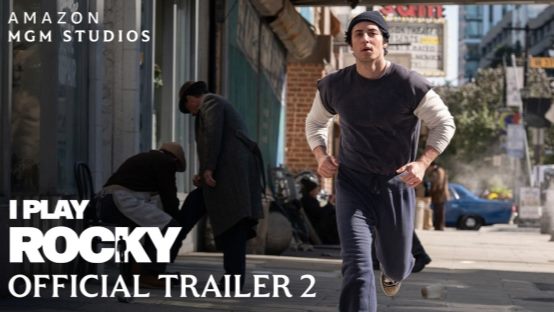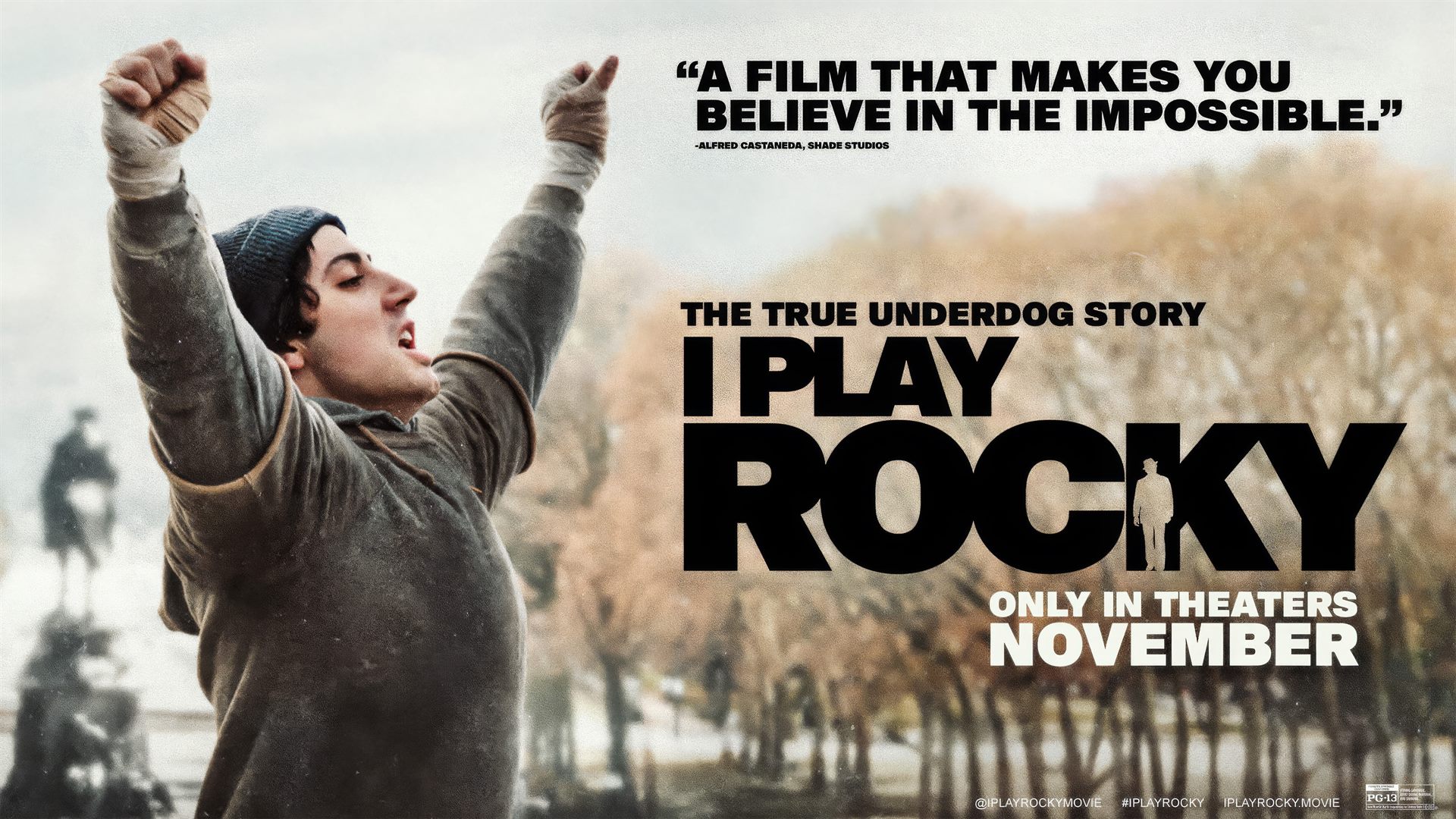
Anthony Ippolito brings Sylvester Stallone's remarkable underdog story to life as Peter Farrelly revisits the struggles behind the making of the 1976 classic.
This fall season marks the 50th anniversary of the release of the film Rocky and, based on its history, it's incredible that this massive hit has been included in the Library of Congress's National Film Registry. Made on a shoestring budget, with a nearly impossible shooting schedule, this feel-good film was the little movie that almost didn't get made at all. The legendary story behind the movie has become almost as significant as the film itself, and this month, the story behind the story gets its due when I Play Rocky debuts in theaters nationwide.
In the early 1970s, a young, out-of-work actor named Sylvester Stallone (Anthony Ippolito; Purple Hearts) is parking cars at an upscale restaurant in Los Angeles, CA. When one of the patrons puts him in touch with well-known film producers Irwin Winkler (P.J. Byrne; Babylon) and Robert Chartoff (Toby Kebbell; Fantastic Four), Stallone slides one of his scripts into their "reading pile." Impressed, they give him notes but don't offer him either a writing or acting job.
Later that afternoon, while sitting in a bar watching the Ali/Wepner fight, Stallone gets an idea and writes the script for Rocky in three days. When he brings it to Winkler and Chartoff, they love it, but Stallone tells them the only way they get the script is if he plays Rocky. Turning down $350,000, Stallone takes the gamble of his life that luckily pays off in the end. However, the stipulations placed on the film production almost derail Stallone's acting career before it can get off the ground.
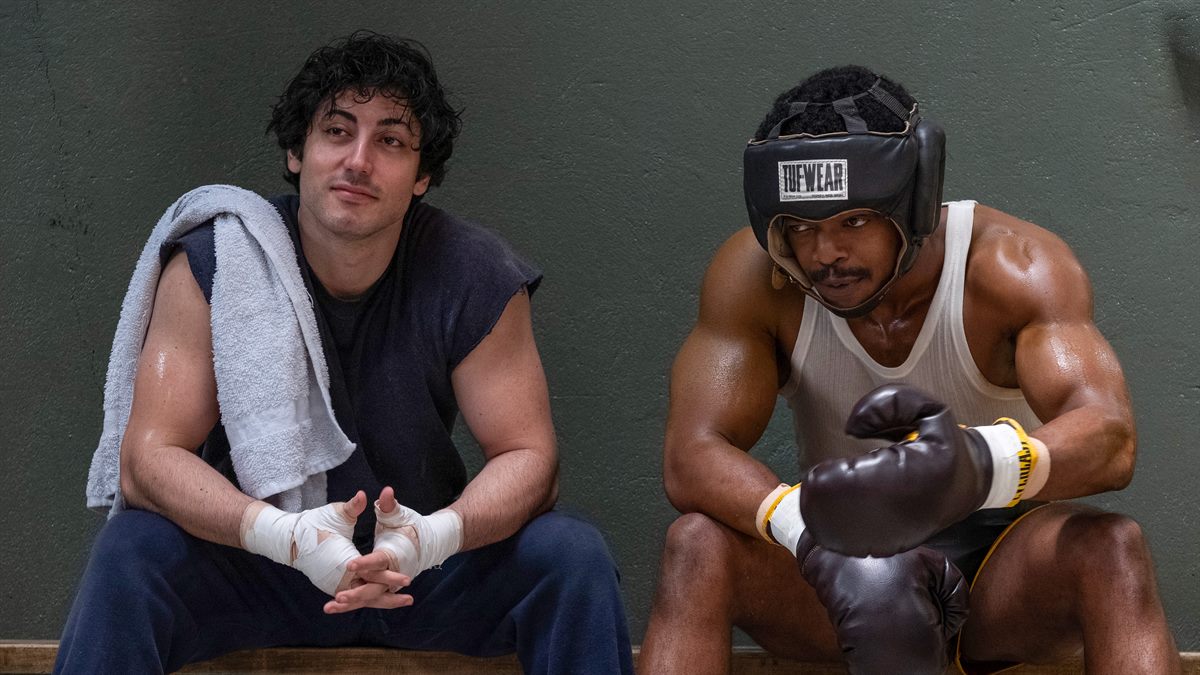
To make this film successful, there had to be not only an excellent script but a young actor to play Stallone. The production team was lucky to find Ippolito, who embodies the essence of Stallone, from the lower-class New Yorker, Italian look and his signature speech impediment to his muscular physique. Ippolito gets it all down pat, and the physical resemblance is uncanny. Playing Stallone's first wife, Sasha, is AnnaSophia Robb (Soul Surfer), who does an excellent job opposite Ippolito. Besides Byrne and Kebbell, other supporting cast members include Tracy Letts (Little Women), Jay Duplass (Transparent), newcomer Kiki Seto, Robert W. Morgan (The Accountant 2), and Matt Dillon (Crash), with a standout performance by Stephan James (If Beale Street Could Talk) as Carl Weathers.
If Ippolito was the right person to play Stallone, then relative newcomer Peter Gamble (Trenches) was the right person to write the script, and Oscar winner Peter Farrelly (Green Book) was the right person to direct the film. Much like Rocky, there is so much heart in every line and camera angle that you can't help but root for Stallone as he stood firm with his conviction in the face of incredible adversity and those who did everything in their power to see him fail. The music also adds an impactful punch (no pun intended), punctuating the seriousness of a scene while also slipping in hints of the Rocky theme that has become iconic in the last fifty years.
Fifty years ago, when Johnny Carson was introducing Sylvester Stallone on The Tonight Show to talk about Rocky, he said, "If they made a movie about how this movie came about, you wouldn't believe it." (Stay for the end credits to see the actual footage.) And here we are half a century later, and I Play Rocky is bound to be not only a success but up for some Oscar nominations as well. If history is destined to repeat itself, this film is a perfect example of that, as Rocky was nominated for several Oscars when it was released.
Interestingly, Stallone was consulted about the script and casting but did not directly participate in the film's production. Makes one wonder what kind of film it would have ended up being had he been involved. Certainly something different and probably not nearly as good. Regardless, I Play Rocky is just as much of an underdog story as Rocky was in 1976 and will have you leaving the theater feeling as uplifted as moviegoers did fifty years ago.
Grade: A-