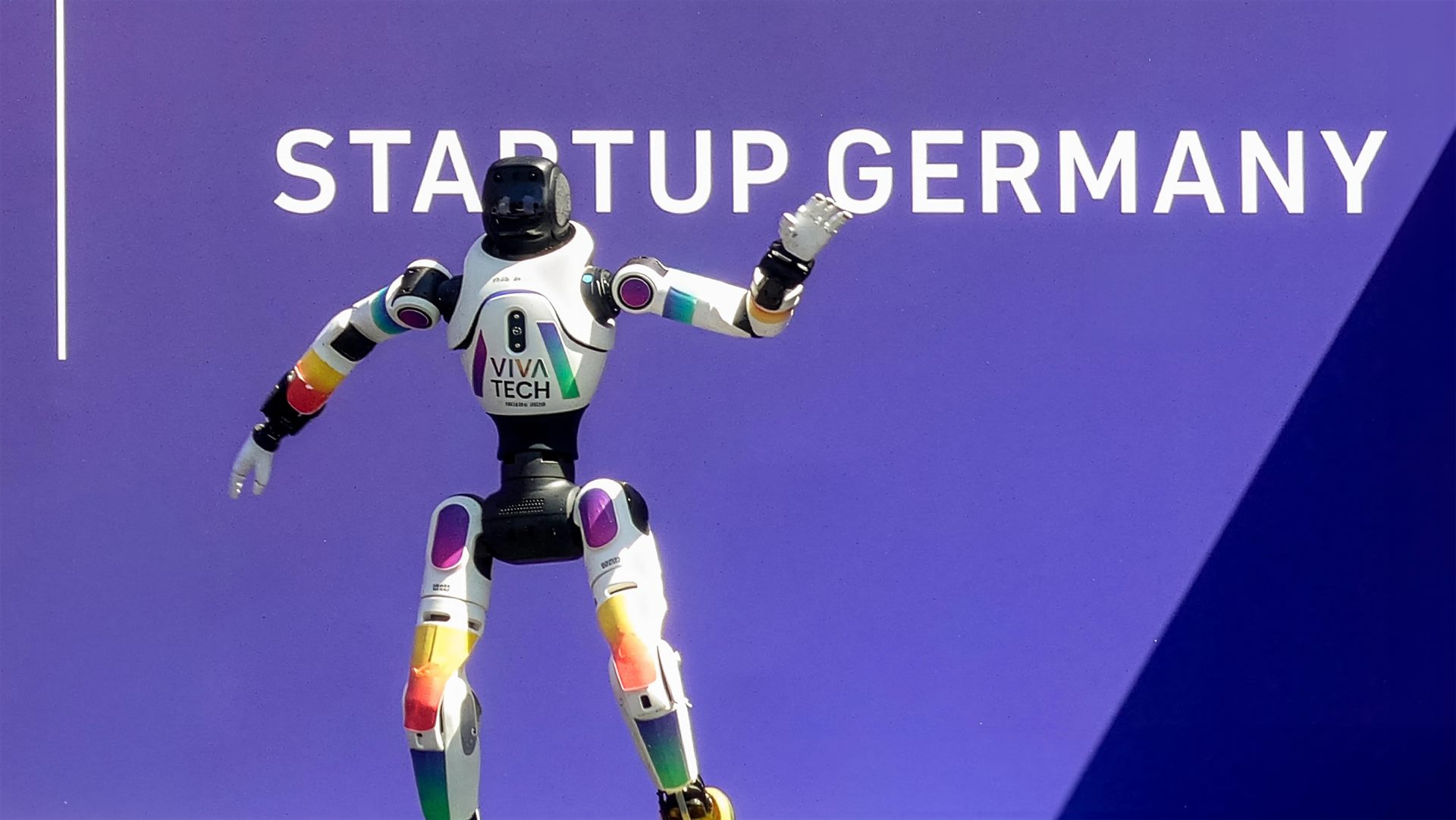
Humanoid robots, artificial intelligence, and emerging technologies transformed the Champs-Élysées into an open-air innovation showcase.
As part of its tenth anniversary celebration, VivaTech expanded beyond its traditional exhibition halls and brought innovation directly into the streets of Paris by transforming the iconic Champs-Élysées into an open-air showcase of emerging technologies. For one day, visitors strolling along one of the world's most recognizable avenues were given free access to demonstrations highlighting artificial intelligence, sustainable mobility, drones, connected services, and robotics.
The initiative reflected a growing effort by organizers to make technological innovation more accessible while demonstrating how rapidly advanced technologies are moving from research laboratories into everyday life. Rather than limiting these experiences to industry professionals, VivaTech placed them directly in front of the public, creating a unique intersection between technology and daily urban life.
Humanoid robots took center stage as VivaTech transformed the Champs-Élysées into a glimpse of tomorrow.
Among the many attractions presented throughout the avenue, humanoid robotics quickly emerged as one of the biggest crowd magnets. Demonstrations featuring autonomous robots performing coordinated dance routines attracted large audiences throughout the day, with visitors gathering to watch machines execute surprisingly fluid movements.
While the performances provided a visually entertaining spectacle, they also highlighted significant advances in balance control, motion planning, and real-time environmental awareness. These technologies remain among the most important challenges facing the future development of humanoid robotics and autonomous systems.
What made the demonstrations particularly interesting was the reaction of the public itself. Rather than viewing robots as distant industrial tools, visitors of all ages interacted with them as entertainment platforms and social technologies. Children eagerly recorded videos while adults discussed future applications ranging from customer service and hospitality to healthcare and personal assistance.
The scene reflected a broader shift in public perception as robots become increasingly familiar through advances in design, software, machine learning, and artificial intelligence. As these technologies continue to evolve, their role within everyday environments appears increasingly realistic rather than speculative.
Beyond the stage performances, dedicated robotics zones allowed attendees to explore machines designed for education, research, and industrial applications. Several platforms demonstrated how humanoid robots are evolving beyond experimental prototypes and moving toward practical real-world use cases.
Exhibitors emphasized that modern robotics is becoming an increasingly multidisciplinary field, combining mechanical engineering, artificial intelligence, sensor technologies, software development, and machine learning to create systems capable of operating in more complex and dynamic environments.
A different vision of the future emerged through companion robots designed to prioritize communication and assistance rather than physical performance. These interactive systems showcased potential applications across healthcare, education, hospitality, and elder care. Their presence highlighted the industry's growing focus on human-centered design, where meaningful interaction may become just as important as mobility, speed, or strength.
The event also reflected the increasingly international nature of the technology ecosystem. Germany, honored as VivaTech 2026's featured country, occupied a prominent role throughout the celebration while highlighting advances in robotics, artificial intelligence, energy innovation, and digital infrastructure. The strong presence of startups and technology organizations reinforced Europe's intention to remain a major player in the next generation of technological development.
Perhaps the most memorable image of the day came from the contrast between the historic architecture of the Champs-Élysées and the futuristic machines moving among thousands of curious spectators. Against a backdrop of Parisian landmarks and luxury storefronts, humanoid robots danced, interacted, and posed for photographs, creating a striking symbol of how quickly advanced technology is becoming integrated into public spaces.
VivaTech's anniversary celebration ultimately demonstrated that robotics is no longer a glimpse of a distant future. From entertainment and education to healthcare and business applications, the technologies on display suggested that many of the innovations once associated with science fiction are steadily becoming part of everyday life.